
Enola’s latest updates
Between one experiment and another, our PhD students try to also take advantage of training and networking opportunities that the RETORNA project is promoting and supporting, activities such as the ones Enola participated in in June:
Retina in a Dish:
Retina in a Dish: Methods & Applications in Life Sciences is a FEBS Advanced Lecture Course that took place in Kuopio, Finland (8-12 June 2026). The course focuses on the use of the retina as an ex vivo model system, teaching researchers how to work with retinal cultures and living retinal tissue outside the organism.
REDES-INNOVAESTIC 2026 at Universidad de Alicante
Members of the RETORNA consortium participated in REDES-INNOVAESTIC 2026, held on 4-5 June 2026 at the University of Alicante (Spain). The conference brought together educators and researchers to discuss the ongoing transformation of university teaching and learning.
We are pleased to highlight the contribution of Enola DC4 who participated as co-author of two posters presented during the event, together with her PI Dr. Natalia Martinez Gil:
- Acompañamiento en la transición laboral de los estudiantes: navegando entre experiencias para alcanzar el éxito (Supporting Students’ Transition into the Workforce: Navigating Experiences to Achieve Success
- Evaluación de la eficacia del aprendizaje activo en el laboratorio de Biología mediante ejercicios prácticos y dibujos científicos en el Grado de Óptica y Optometría (Evaluating the Effectiveness of Active Learning in the Biology Laboratory through Practical Exercises and Scientific Drawing in the Bachelor’s Degree in Optics and Optometry
These contributions reflect RETORNA’s commitment not only to excellence in research, but also to innovation in education, student development, and the adoption of effective teaching methodologies. Participation in REDES-INNOVAESTIC 2026 provided an excellent opportunity to exchange experiences and explore new approaches to enhancing higher education.
PD-BEA Seminario
First first-author publication accepted
And last but certainly not least, we are delighted to celebrate a major achievement from our RETORNA doctoral candidates: Enola’s first first-author scientific paper has been accepted and published in Cell Death Discovery, part of the prestigious Nature Portfolio!
The article, entitled “Age- and Sex-Dependent Retinal Degeneration in Peripherin-2 Mutant Mice, a Model of Central Areolar Choroidal Dystrophy“, is now available online, providing early access to the study’s findings while the final edited version is being prepared by the journal.
This publication represents an important milestone in Enola’s doctoral journey and highlights the high-quality research being carried out within the RETORNA project.
We are really proud to share this achievement with our community and eager to see the final published version.
Once the fully edited article becomes available, we will feature it in the Publications section of the RETORNA website and deposit it in the RETORNA Zenodo Community to ensure broad accessibility and dissemination of the research results.
Congratulations to Enola and all co-authors on this excellent accomplishment! 🎉👏
Claire and Maria Eduarda focus on secondments and dissemination activities
 Claire Willmington (UCC/Cork University Business School, Ireland)
 Retina International, Ireland
Claire spent 3 months with Retina International, a global patient-led organization dedicated to representing and advocating for people living with inherited retinal diseases and other retinal conditions.
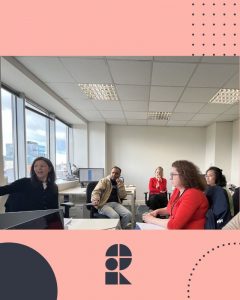
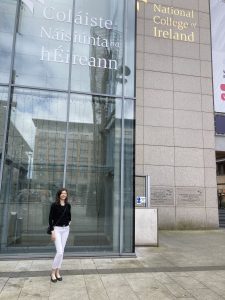
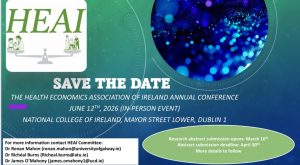
The event brought together professionals involved in health economics, health policy, and healthcare decision-making across Ireland such as academic researchers and government analysts, health policymakers, healthcare industry representatives, patient advocates and clinician representatives.
The conference aims to facilitate the presentation of new research, stimulate discussion on current health economic and policy issues, and strengthen collaboration among stakeholders.
The event provided Claire with the opportunity to present her poster “Patient preferences for retinal gene therapy: A discrete choice experiment in Germany, Ireland and Spain” while engaging with experts in health technology assessment, economic evaluation, health policy, and healthcare financing.
Maria Eduarda Pires (UCV, Spain) University of Tübingen, Germany
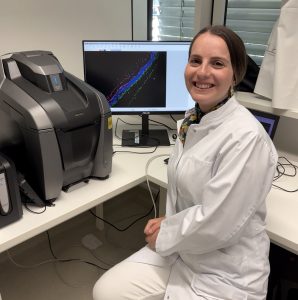
Maria Eduarda spent two months in Tübingen, where she returned for the second time during her PhD. Read about her first German experience here.
“My time in Tübingen has come to an end, and it’s been an amazing two months. Being more comfortable in the lab meant I could finish up with positive results, which is always a great feeling.
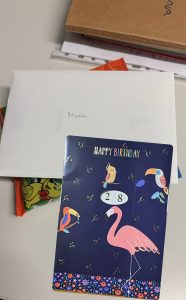
A huge thank you to Dr. Sven for having me, and to everyone in the lab for being so welcoming and helping me during this process. I really appreciated the kind gesture on my birthday, it was so nice to be remembered while far from home. I also want to thank Nathalie and Sean, your friendship and daily company meant a lot to me. It was a pleasure returning to Tübingen!”
Greetings,
RETORNA team